



manager will contact you to take your order
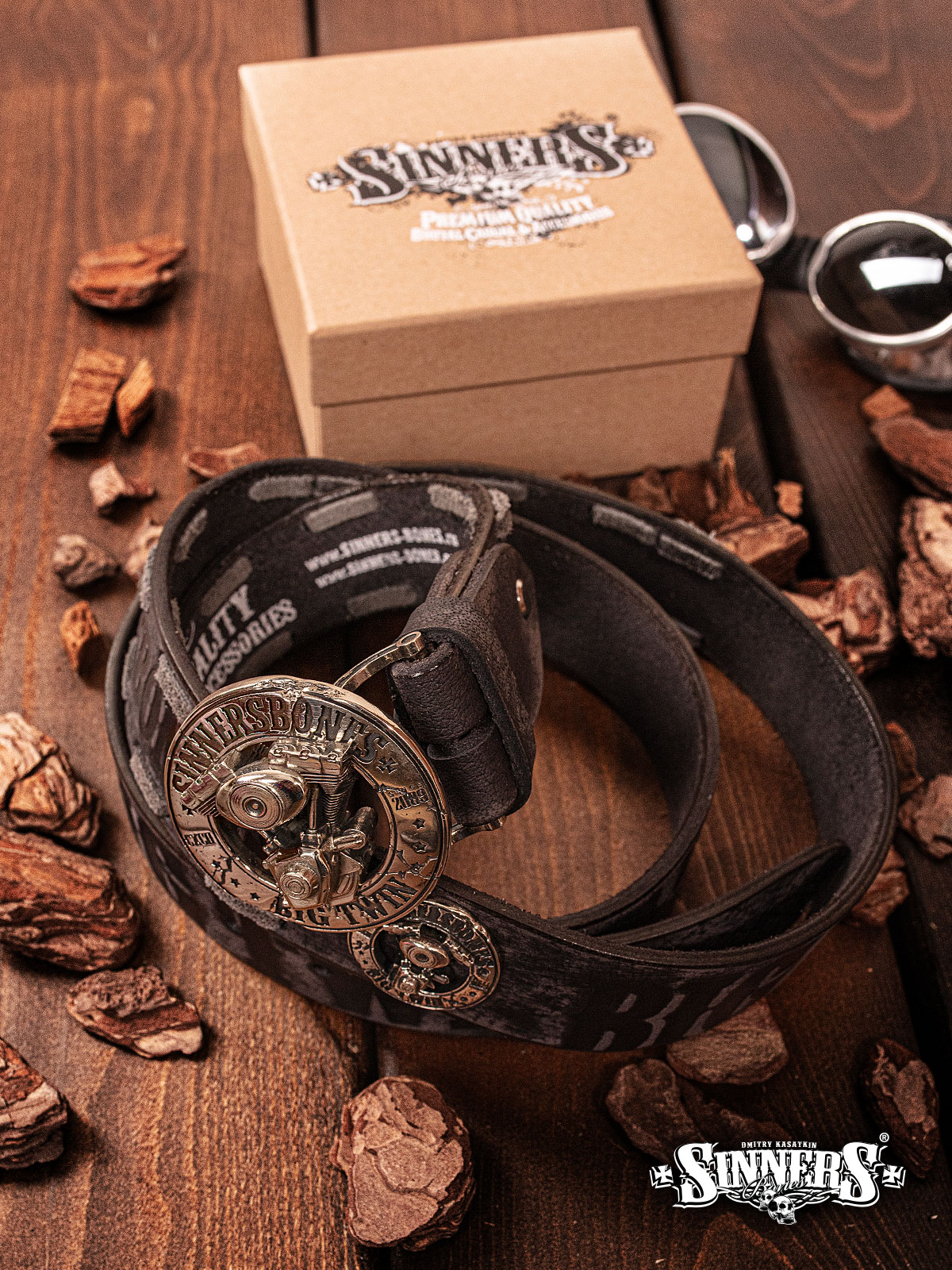
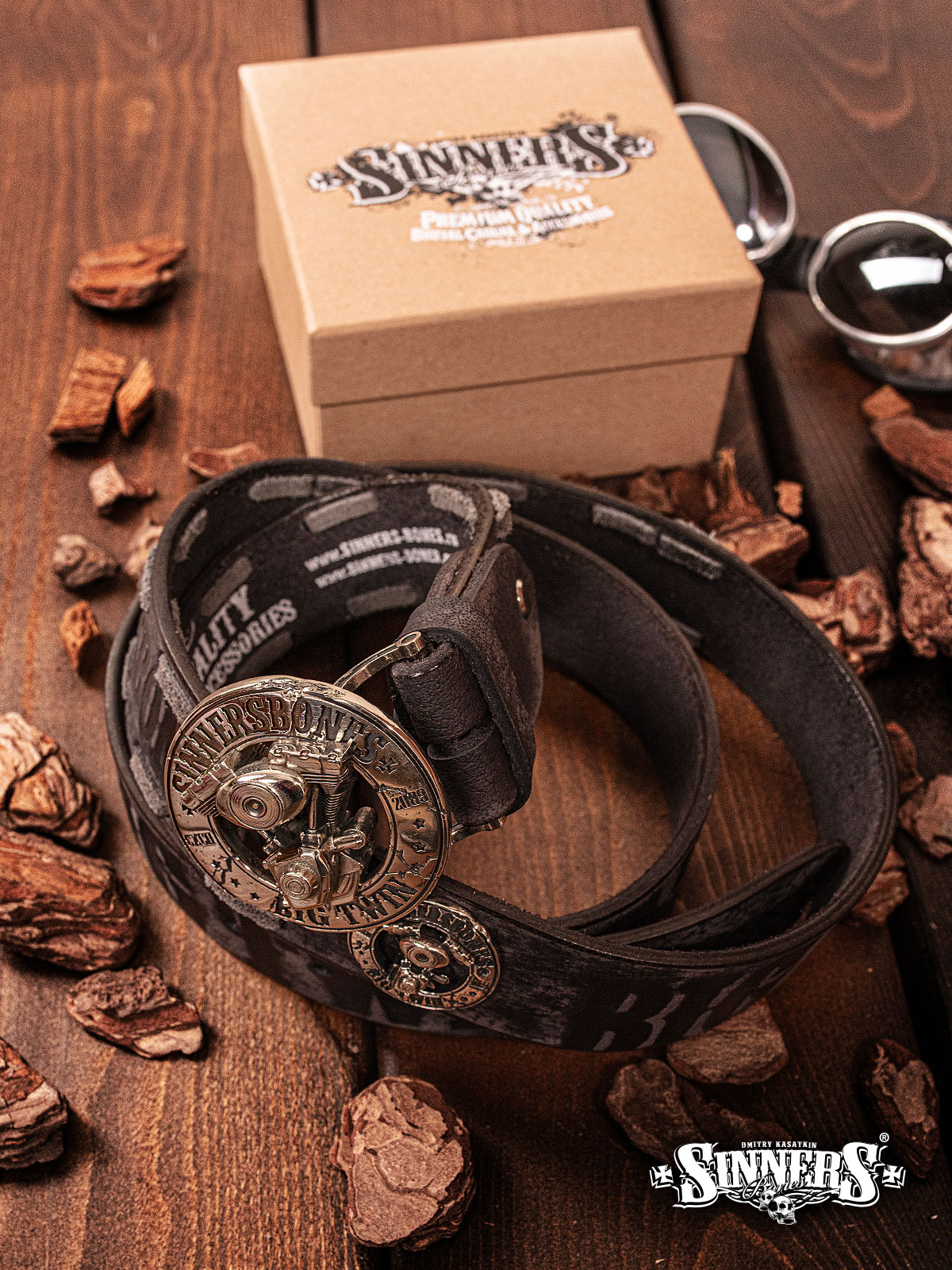
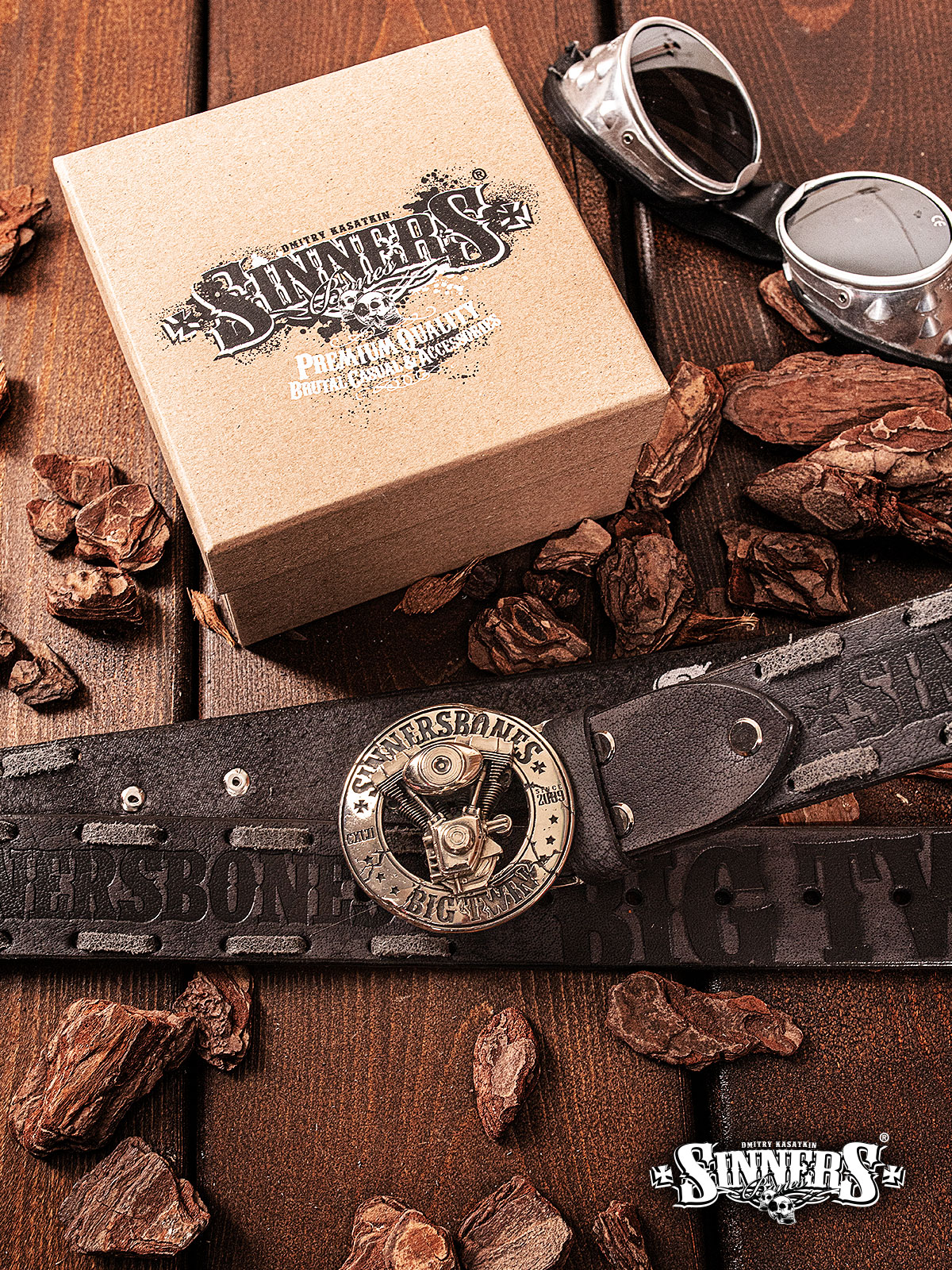
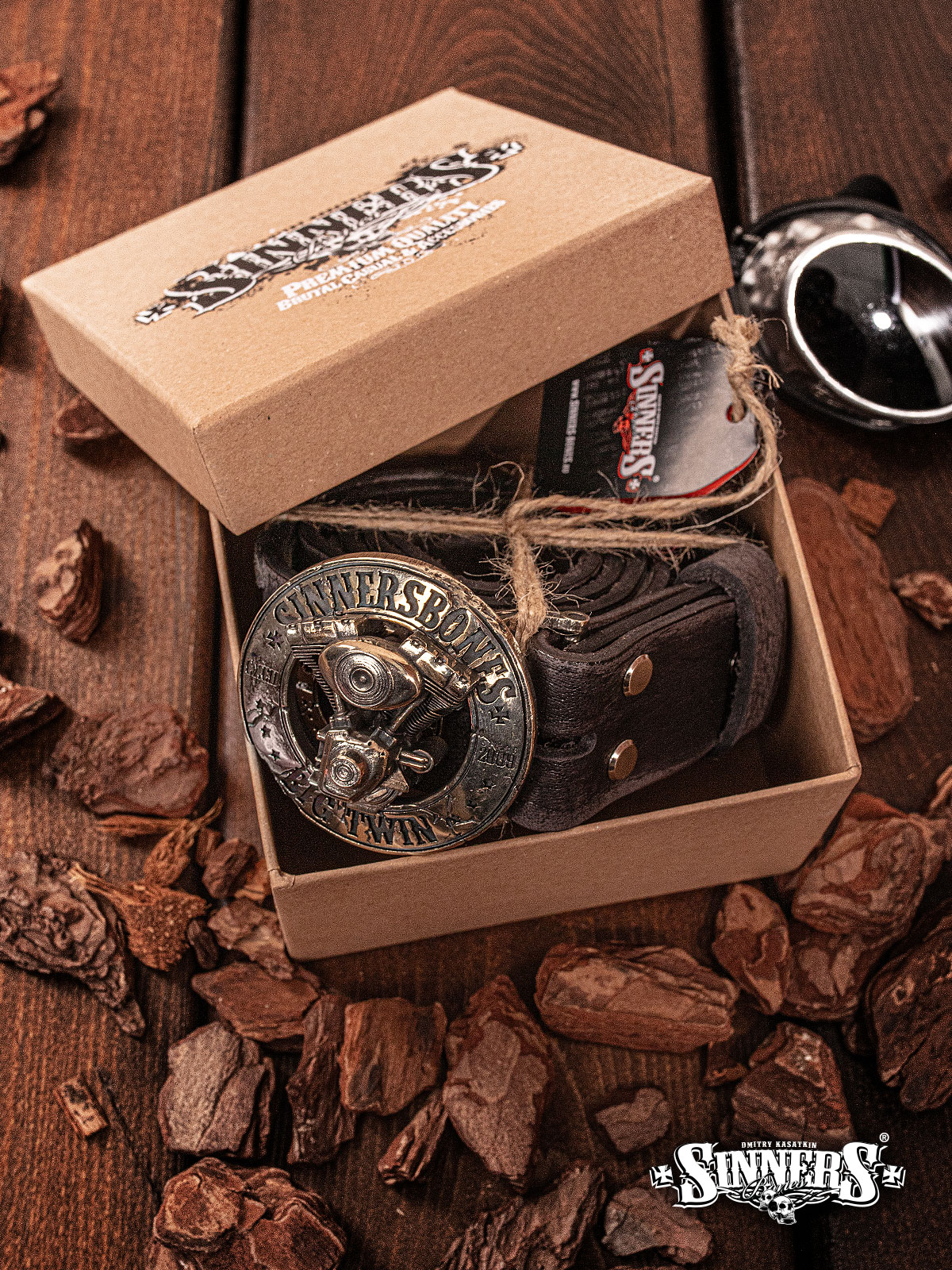
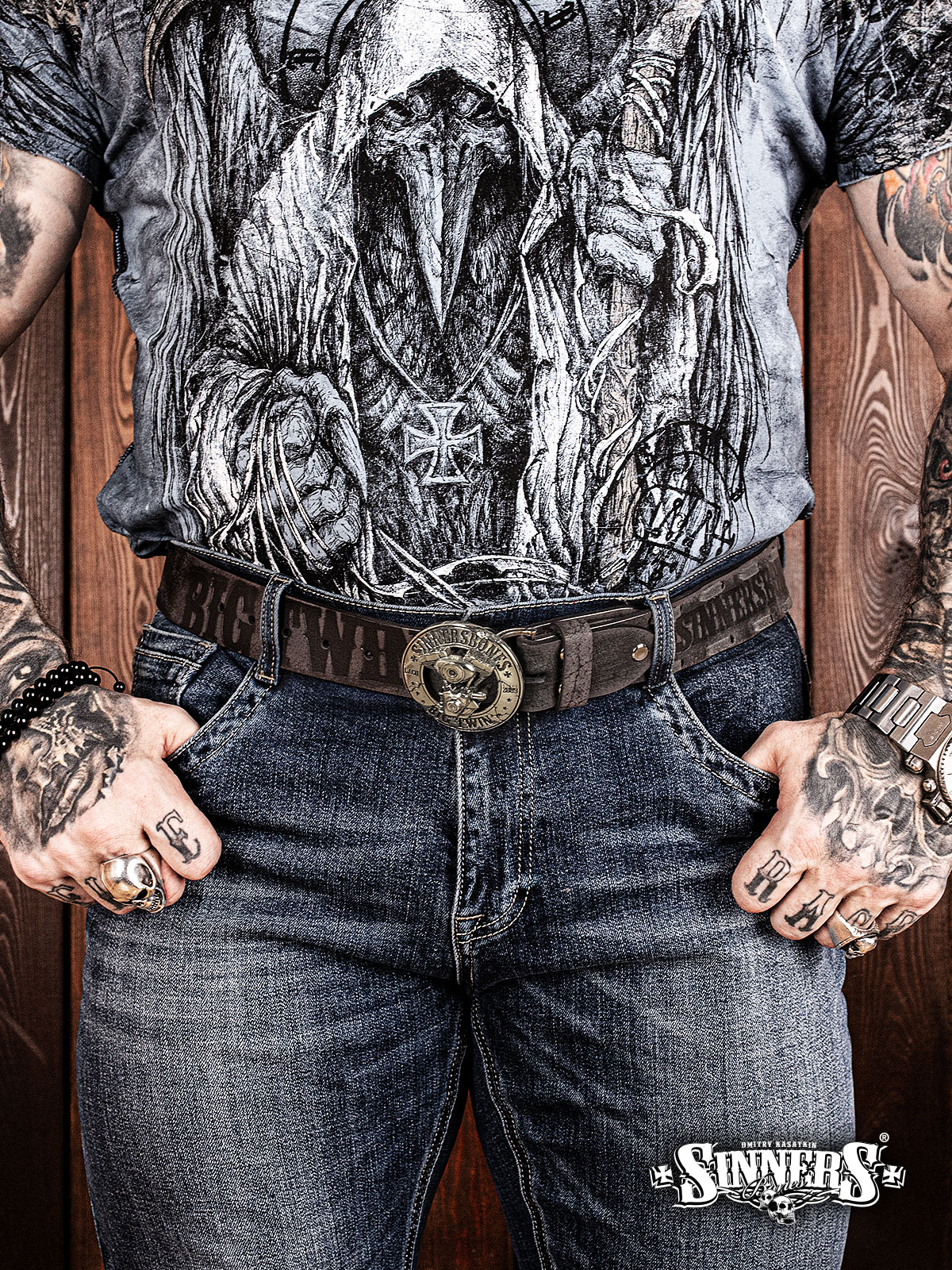
Belt with "BIG TWIN" buckle in a branded gift box. Belt made of genuine, thick, artificially aged American buffalo leather. The buckle design is based on SINNER's popular signature image — a powerful V-twin engine, called "BIG TWIN." The belt and buckle are made by hand.
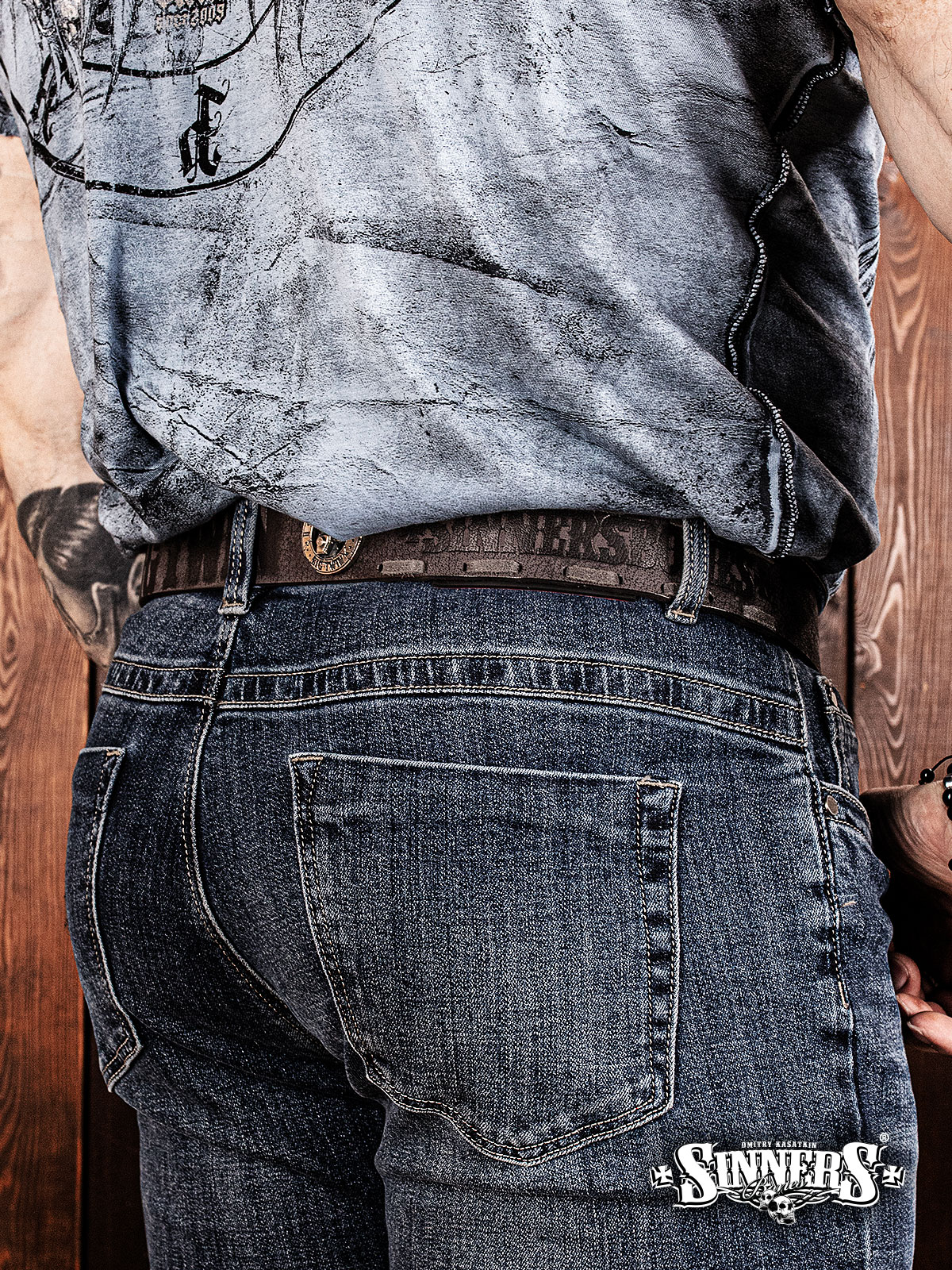
The brutal buckle is made by artistic casting from nickel silver with patination and mirror coating, weighing 161 g. The belt also contains conchos in the form of a reduced buckle, also made of nickel silver with patination and a mirror finish. Embossed along the entire length of the belt in the form of the slogan "BIG TWIN." Leather inserts around the perimeter of the belt will bring more brutality to your image.
Belts in six sizes 90, 100, 110, 120, 130, and 145 cm, with eight holes in 2.5 cm increments. Everything is done so that the belt does not need to be adjusted to suit you. For a detailed diagram of belt sizes, see below in "Parameters of this product."
The love of speed, boldness, and the brutal side of your nature is best emphasized by the practical and exclusive Belt with a "BIG TWIN" buckle, which pairs perfectly not only with biker leather pants but is also quite capable of fitting into the usual image of a city dweller and looking decent with classic jeans. By purchasing this accessory, you emphasize your individuality and add zest and originality to your clothing style!
The belt looks very brutal and powerful! A leather belt with a "BIG TWIN" buckle is a charismatic and impressive accessory, as well as an important attribute of a real biker! A belt with a buckle in beautiful branded packaging is an excellent solution for a presentable and brutal gift for your loved ones from the SINNER's BONES Brand!
Belt width: 40 mm.
Buckle weight: 161 g.
Attention! Due to the design of the belt, only one concho is placed on the 90cm and 100cm length belts. Two conchos are placed on belts 110cm, 120cm, and 130cm long. There are 3 conchos on a 145cm long belt.
Patina, a film of various shades (from green to brown), formed on the surface of copper, bronze and brass products as a result of metal corrosion under the influence of the natural environment or as a result of patination, that is, heating or treatment with oxidizing agents. Patination of metal as a "plaque of antiquity" was first realized by the artists of Ancient Rome.